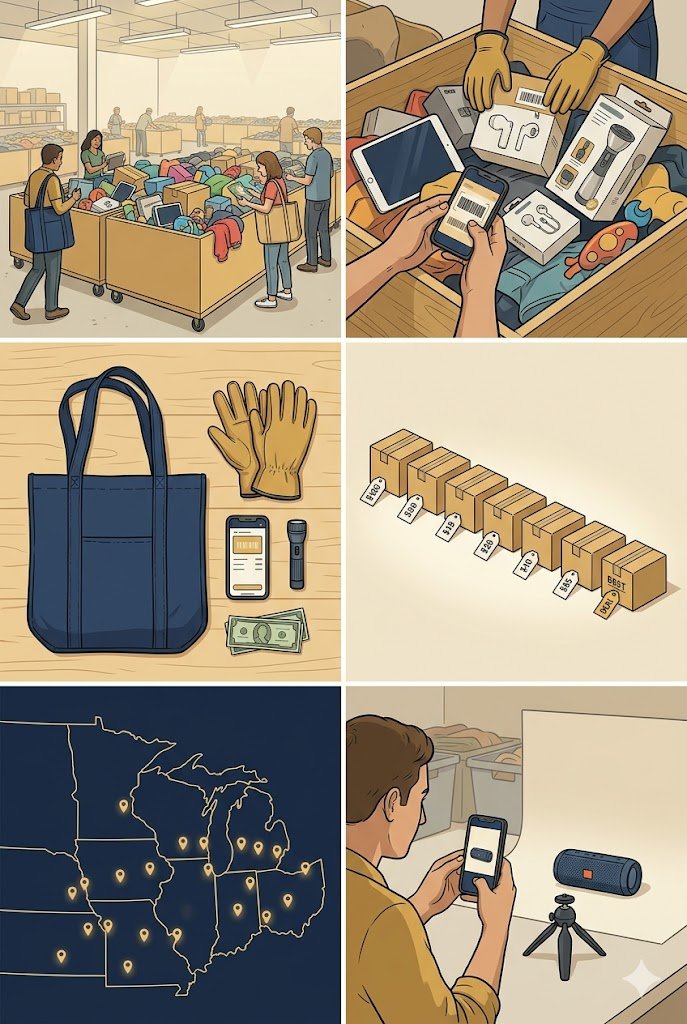
The Non-Negotiables
These four items are required for a productive bin store visit. Showing up without them handicaps your entire trip.
1. Large Reusable Shopping Bags (Multiple)
Bin stores provide no bags. This is not an oversight — it's a cost-control measure that keeps overhead low and prices down. Bring large, sturdy reusable tote bags. IKEA Frakta bags (the big blue ones, $1.99) are the unofficial standard of the bin store world. They're enormous, durable, hold 50+ pounds, and fold flat in your car. Bring at least two, ideally three.
Don't bring plastic grocery bags — they tear under weight. Don't use a small purse or backpack as your primary bag — you'll run out of space immediately on restock day.
2. Work Gloves
Bin frames are made of rough wood or metal with staples and exposed edges. Digging through bins for 30–60 minutes without gloves means splinters, cuts, and sore hands. A basic pair of cotton or light leather work gloves ($5–$8 at any hardware store) transforms the experience. They're also useful for handling heavy or awkward items at the bottom of deep bins.
3. A Fully Charged Phone
Your phone is your most important bin store tool. You'll use it to scan barcodes, check resale prices, look up product reviews, and photograph potential finds before you commit to carrying them through the store. A dead phone means buying blind. Bring a portable battery pack if you're planning a long visit or hitting multiple stores.
4. Cash (In Addition to Cards)
Most bin stores accept credit and debit cards, but cash sometimes earns an informal discount at independent stores — especially if you're buying in volume or asking the owner about back-of-store merchandise. Bring both. Keep small bills for fast checkout on dollar day when lines get long.
Highly Recommended
Barcode Scanning App
The Amazon Seller app (free) lets you scan any barcode and instantly see the item's current Amazon listing price, sales rank, and whether it's restricted for resale. eBay's app shows completed (sold) listings — the actual prices items sell for, not just listed prices. Use both. The 10-second scan that tells you a $10 item sells for $65 is the most valuable tool in bin store shopping.
Small Flashlight or Phone Light
Bin stores are often in warehouse or strip-mall spaces with variable lighting. The bottom of a deep bin is frequently in shadow. A small pocket flashlight — or just using your phone's flashlight — reveals items buried under layers of merchandise that casual shoppers miss. This is especially useful for electronics, where model numbers and condition details matter.
Tape Measure
Essential if you're shopping for furniture, rugs, appliances, or anything that needs to fit a specific space. Bin stores occasionally have larger items mixed in or staged nearby. A 12-foot tape measure takes up no space and prevents the classic mistake of buying something that doesn't fit.
A Notebook or Notes App
Experienced resellers track what they find, what they paid, and what it sold for over time. Even casual shoppers benefit from noting restock day schedules, specific store strengths, and items worth coming back for on dollar day.
Leave These at Home
- Children (during restock day): Restock day crowds at busy stores are intense. Adults moving fast through narrow bin aisles is not a safe environment for small children. Mid-week or dollar day visits are much more family-friendly.
- Oversized backpacks: Most bin stores require you to leave large backpacks at the door or with staff — a standard theft-prevention measure. A small daypack is fine; a hiking pack is not.
- Rigid shopping carts or bins: Some shoppers bring their own wheeled bins to transport finds — this is generally frowned upon at crowded stores and can block aisle access for other shoppers.
Level Up: A Dedicated Barcode Scanner
Once you're making regular bin store runs, the NETUM Bluetooth Barcode Scanner ($34.99) is worth adding to your kit. It pairs wirelessly with your phone via Bluetooth or 2.4G, works with both the Amazon Seller and eBay apps, and lets you scan with one hand while you dig with the other — significantly faster than holding your phone over barcodes. It's the most popular barcode scanner among active Midwest bin store resellers. As an Amazon Associate, we earn from qualifying purchases.
Download and Print
We've condensed this entire list into a single printable checklist you can keep in your car or shopping bag. Download our free Midwest Bin Store Shopper's Checklist — no email required, one page, ready to print.